Instructions
- Prepare the Roasted Potatoes: Preheat oven to 400°F (200°C). In a large bowl, toss the cut potatoes with olive oil, dried rosemary, garlic powder, salt, and pepper until evenly coated. Spread the potatoes in a single layer on a large baking sheet. Roast for 30-40 minutes, or until golden brown and tender, flipping halfway through. If using, sprinkle with chopped fresh parsley and crumbled feta cheese after roasting. Keep warm.
- Cook the Savory Sausages: While potatoes are roasting, heat a large skillet over medium heat. Add the breakfast sausage links or patties and cook for 8-12 minutes, turning occasionally, until thoroughly cooked through and nicely browned on all sides. Drain on a paper towel-lined plate to remove excess grease. Keep warm.
- Make the Pancake Batter: In a large bowl, whisk together the flour, sugar, baking powder, and salt. In a separate medium bowl, whisk together the milk, egg, melted butter, and vanilla extract. Pour the wet ingredients into the dry ingredients and mix until just combined. A few lumps are okay; do not overmix, as this can lead to tough pancakes.
- Cook the Pancakes: Heat a large non-stick skillet or griddle over medium-low heat and lightly grease with butter. Pour about ¼ cup of batter per pancake onto the hot skillet. Cook for 2-3 minutes per side, or until golden brown and cooked through. The first side is ready to flip when bubbles appear on the surface and the edges look set. Transfer cooked pancakes to a wire rack set over a baking sheet in a warm oven (around 200°F/95°C) to keep them warm while you cook the remaining batter. Once all pancakes are cooked, create a stack for the board.
- Prepare the Scrambled Eggs: In a medium bowl, whisk the eggs with milk or cream, salt, and pepper until just combined (do not over-whisk). Melt butter in a large non-stick skillet over medium-low heat. Pour in the egg mixture. Cook, stirring gently with a spatula, pushing the cooked egg from the edges to the center, until the eggs are softly set and still moist (about 5-7 minutes). Do not overcook. If using, stir in fresh chives or parsley just before serving. Transfer to a serving dish.
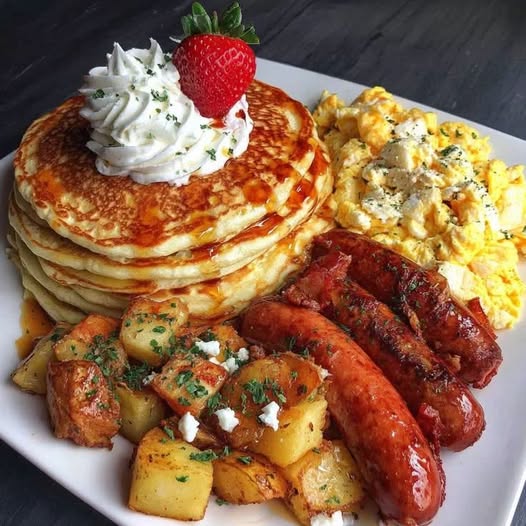
- Assemble the Brunch Board: Choose a large cutting board, platter, or serving tray. Arrange the components aesthetically. Start by placing the main elements: the stack of pancakes, the scrambled eggs, the savory sausages, and the roasted potatoes.
- Garnish the Pancakes: Drizzle the pancake stack generously with maple syrup. Top with a dollop of whipped cream and a fresh strawberry.
- Add Optional Elements: If making avocado toast, toast bread and slice avocados. Arrange these on the board. Fill in gaps with cherry tomatoes, cucumber slices, and mixed berries. Place small bowls of cream cheese, jam, or extra maple syrup around the board.
- Prepare the Mimosas: For each mimosa, pour equal parts chilled orange juice and chilled sparkling wine into champagne flutes. Serve immediately.
- Serve: Present your magnificent brunch board and mimosas for everyone to enjoy!
Cooking Tips and Variations
To achieve truly fluffy pancakes, remember not to overmix your batter. Overmixing develops the gluten in the flour, leading to a tougher pancake. A few lumps are perfectly fine! For an extra boost of flavor and tenderness, consider using buttermilk in your pancake recipe. The acidity in buttermilk reacts with the baking powder, creating more bubbles and a lighter texture. When cooking, ensure your griddle or skillet is at a consistent medium-low heat; too high, and the pancakes will burn on the outside before cooking through the middle. A good indicator that a pancake is ready to flip is when you see bubbles forming on the surface and the edges looking dry and set.
For creamy, dreamy scrambled eggs, the key is low and slow heat. Cooking eggs too quickly at high temperatures will result in rubbery, dry eggs. Stir gently and consistently, allowing the curds to form slowly. A splash of milk or cream not only adds richness but also helps to keep the eggs moist. Don’t be afraid to pull them off the heat when they still look slightly undercooked, as they will continue to cook from residual heat. Fresh herbs like chives or parsley stirred in at the very end elevate the flavor and add a beautiful pop of color.
When roasting potatoes, aim for consistency in your chop size. This ensures even cooking. Tossing them generously with olive oil and spices (rosemary and garlic powder are classics for a reason!) before roasting is crucial for flavor and crispiness. Roasting at a higher temperature, around 400°F (200°C), helps achieve that desirable crispy exterior while keeping the inside tender. Flipping them halfway through ensures all sides get golden brown. For an extra savory kick, consider seasoning with smoked paprika or a pinch of cayenne pepper.
To make your brunch board truly customizable, consider dietary needs. For a dairy-free option, substitute almond or oat milk in pancakes and eggs, and use a dairy-free whipped cream. For gluten-free pancakes, simply use a reliable gluten-free all-purpose flour blend. You can also include a variety of plant-based sausages or bacon alternatives to cater to vegetarian or vegan guests. Adding a colorful array of fresh fruits and vegetables like sliced bell peppers, grapes, or melon cubes not only adds visual appeal but also provides lighter, refreshing options. Don’t forget a savory spread like hummus or a sweet one like a berry compote to accompany any breads or crackers you might include.
For your mimosas, while orange juice is classic, don’t shy away from experimenting with other fruit juices like grapefruit, cranberry, or even peach nectar for a Bellini twist. Always ensure both the juice and sparkling wine are well-chilled for the best experience. A beautiful garnish like a fresh berry or an orange slice on the rim of the flute adds a touch of elegance.
Storage and Reheating
Proper storage is key to enjoying your brunch board leftovers without compromising on taste or safety. Once your brunch is over, promptly transfer each component into separate airtight containers. Do not leave perishable items like eggs, sausages, or dairy-based toppings at room temperature for more than two hours. Store all components in the refrigerator.
Pancakes can be stored in an airtight container for up to 2-3 days. To reheat, you can pop them in a toaster or toaster oven for a few minutes until warmed through and slightly crispy, or microwave them for 30-60 seconds until hot. For a larger batch, place them on a baking sheet and heat in a preheated oven at 350°F (175°C) for about 5-7 minutes. This method helps prevent them from becoming soggy.
Scrambled eggs are best enjoyed fresh, as they tend to dry out upon reheating. However, if you have leftovers, store them in an airtight container for up to 2 days. To reheat, gently warm them in a non-stick skillet over low heat, stirring frequently, and add a tiny splash of milk or cream to help restore some moisture. Alternatively, microwave on a low setting in short bursts (15-30 seconds) until just warm, stirring in between. Avoid high heat, which will make them rubbery.
Cooked sausages can be refrigerated for 3-4 days. Reheat them in a skillet over medium heat until warmed through and slightly crisp, or in the microwave in 30-second intervals. Roasted potatoes also store well for 3-4 days. For best results, reheat them in a preheated oven at 400°F (200°C) for 10-15 minutes, or until crispy again. A toaster oven works wonderfully for smaller portions. Microwaving them is an option, but they may lose some crispiness.
Any fresh fruit should be stored separately in its own container or bag. Avocado slices are best consumed immediately after cutting, as they brown quickly. If you must store them, a squeeze of lemon or lime juice can help slow down oxidation, but they will still be best fresh. Mimosas are not suitable for storage; the sparkling wine will lose its effervescence. Prepare them fresh for each serving.
Frequently Asked Questions
Can I prepare any components of the brunch board ahead of time?
Absolutely! Many elements can be prepped in advance to make brunch day less stressful. The pancake dry ingredients can be mixed the night before. Roasted potatoes can be chopped and seasoned, ready to go into the oven. Sausages can be cooked and then gently reheated. You can also wash and chop any fruits or vegetables. The egg mixture for scrambled eggs should ideally be whisked just before cooking, but you can have the other ingredients (butter, herbs) pre-measured and ready.
What if I don’t have a large serving board?
No problem at all! You can use any large platter, baking sheet, or even multiple smaller plates arranged together to create a similar effect. The key is to arrange the food attractively and make it easy for guests to access. You can also use individual serving dishes for each component and place them on a table buffet-style. Don’t let the lack of a specific board deter you from creating a beautiful spread!
How can I keep the food warm while assembling the entire board?
Keeping food warm is crucial for a pleasant brunch experience. As you cook each component, transfer it to a baking sheet and keep it in a very low oven (around 200°F or 95°C). You can also use slow cookers on a “warm” setting for items like sausages or even scrambled eggs (though be careful not to overcook the eggs). Covering dishes with foil can also help retain heat. Assemble the board as quickly as possible once all components are ready, or serve some items immediately as others are being placed on the board.