Instructions
-
Prepare the Fries:
- Place the cut potato fries in a large bowl and cover them with cold water. Let them soak for at least 30 minutes (or up to a few hours in the refrigerator) to remove excess starch. This helps achieve crispier fries.
- Drain the potatoes thoroughly and pat them completely dry with paper towels. This is a crucial step to prevent oil splattering and ensure crispness.
- In a large, heavy-bottomed pot or Dutch oven, heat the vegetable oil over medium-high heat until it reaches 325°F (160°C). Use a deep-fry thermometer for accuracy.
- Carefully add about half of the dried fries to the hot oil. Do not overcrowd the pot. Fry for 5-7 minutes, or until the fries are soft and slightly pale, but not browned. Remove with a slotted spoon or spider and transfer to a wire rack set over a baking sheet. Repeat with the remaining fries.
- Increase the oil temperature to 375°F (190°C).
- Return the blanched fries to the hot oil in batches. Fry for 2-4 minutes, or until golden brown and crispy.
- Remove the crispy fries with a slotted spoon and transfer them to a clean wire rack lined with paper towels to drain excess oil. Immediately sprinkle with salt and garlic powder (if using).
-
Prepare the Sautéed Peppers and Onions:
- While the fries are double-frying or resting, heat 1 tablespoon of olive oil in a medium skillet over medium heat.
- Add the sliced red bell pepper, yellow bell pepper, and onion to the skillet.
- Sauté for 5-7 minutes, stirring occasionally, until the vegetables are tender-crisp and slightly caramelized.
- Season with salt and freshly ground black pepper to taste. Remove from heat and set aside.
-
Cook the Garlic Steak:
- Pat the steaks completely dry with paper towels. Season generously with salt and freshly ground black pepper on both sides.
- Heat 2 tablespoons of olive oil in a heavy-bottomed skillet (cast iron works best) over high heat until it just begins to smoke.
- Carefully place the seasoned steaks in the hot skillet. Sear for 2-4 minutes per side for medium-rare, depending on the thickness of the steak and your desired doneness. For a 1-inch thick steak:
- Rare: 2-3 minutes per side
- Medium-Rare: 3-4 minutes per side
- Medium: 4-5 minutes per side
- Medium-Well: 5-6 minutes per side
- During the last minute of cooking, reduce the heat to medium. Add the butter, minced garlic, and rosemary (if using) to the skillet.
- Tilt the pan slightly and, using a spoon, continuously baste the melted butter and garlic mixture over the steaks for the remaining minute of cooking. This infuses the steak with incredible flavor.
- Remove the steaks from the skillet and transfer them to a cutting board. Tent loosely with foil and let them rest for 5-10 minutes. This allows the juices to redistribute, ensuring a tender and juicy steak.
-
Assemble the Fresh Side Salad:
- In a large bowl, combine the mixed greens, sliced cucumber, halved cherry tomatoes, and thinly sliced red onion.
- In a small bowl, whisk together the extra virgin olive oil, red wine vinegar, Dijon mustard, sugar or honey, salt, and black pepper until well combined.
- Just before serving, drizzle the vinaigrette over the salad and toss gently to coat.
-
Plate and Serve:
- Slice the rested steaks against the grain into 1/2-inch thick slices, or serve whole if preferred.
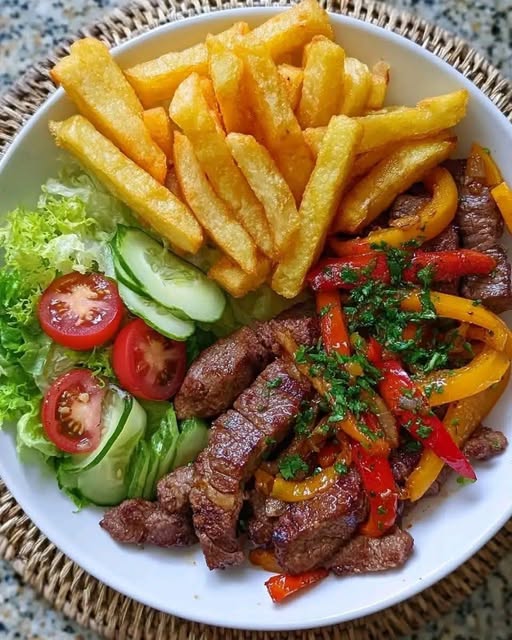
- Arrange a portion of the sliced steak, crispy fries, and sautéed peppers and onions on each plate.
- Add a generous serving of the fresh side salad.
- Garnish the entire plate with chopped fresh parsley. Serve immediately and enjoy your homemade Garlic Steak & Fries Plate!
Cooking Tips and Variations
Achieving the perfect Garlic Steak & Fries Plate is all about attention to detail and a willingness to experiment. Here are some tips to elevate your dish and variations to keep things exciting:
Tips for Best Results:
- Steak Selection: While sirloin is a great option, feel free to use other quick-cooking cuts like flank, skirt, or even a thicker ribeye. Adjust cooking times accordingly. Always aim for steaks that are at least 1 inch thick for a good sear and juicy interior.
- Pat Dry, Always: For both the steak and the fries, moisture is the enemy of crispness and a good sear. Always pat them thoroughly dry with paper towels before cooking.
- Hot Pan, Cold Oil: For searing steak, get your skillet smoking hot before adding the oil, then add the oil just before the steak. This helps create a beautiful crust.
- Don’t Overcrowd: Whether you’re frying fries or searing steak, avoid overcrowding the pan. This lowers the temperature, leading to steaming instead of searing or frying, resulting in soggy food. Cook in batches if necessary.
- Rest Your Steak: This is non-negotiable! Resting the steak allows the muscle fibers to relax and reabsorb the juices, preventing them from spilling out when you cut into it.
- Season Generously: Steak can handle a good amount of salt and pepper. Don’t be shy! Season just before cooking.
- Garlic Timing: Add the minced garlic and butter to the steak pan towards the end of cooking. Garlic burns quickly, and burnt garlic is bitter. Basting with the butter and garlic ensures maximum flavor infusion without bitterness.
- Double Fry for Crispy Fries: The two-stage frying process (blanching at a lower temperature, then crisping at a higher temperature) is the secret to truly crispy, fluffy-on-the-inside fries.
- Season Fries Immediately: Salt and any other seasonings adhere best to fries when they are hot and fresh out of the oil.
Recipe Variations:
- Steak Marinades: For an extra layer of flavor, marinate your steak for 30 minutes to 2 hours before cooking. A simple marinade of soy sauce, Worcestershire sauce, garlic, and a touch of ginger works wonderfully.
- Herb Butter: Instead of just rosemary, experiment with other fresh herbs like thyme or oregano in your basting butter. A pinch of red pepper flakes can add a subtle kick.
- Garlic Confit: For an even richer garlic flavor, make a quick garlic confit (slowly cook garlic cloves in olive oil until soft) and use the oil and mashed cloves to baste your steak or mix into the fries.
- Different Fry Seasonings: Beyond salt and garlic powder, try paprika, onion powder, cayenne pepper, a sprinkle of Parmesan cheese, or a store-bought fry seasoning blend.
- Sweet Potato Fries: Swap out Russet potatoes for sweet potatoes for a naturally sweeter and slightly healthier alternative. Adjust frying times as sweet potatoes cook faster.
- Baked or Air-Fried Fries: If you prefer to avoid deep frying, you can bake or air-fry your fries. Toss them with a little oil, salt, and seasonings and cook according to appliance instructions until golden and crispy.
- Loaded Fries: Take your fries to the next level by topping them with melted cheese, crispy bacon bits, green onions, or a dollop of sour cream.
- Salad Dressings: While the simple vinaigrette is refreshing, feel free to use your favorite dressing. A creamy Caesar, a tangy balsamic, or a zesty lemon-herb dressing would also be delicious.
- Add-ins for Salad: Boost your salad with crumbled feta or goat cheese, toasted nuts (walnuts, pecans), croutons, or avocado slices.
- Spicy Kick: Add a pinch of red pepper flakes to the sautéed peppers and onions, or a dash of hot sauce to your vinaigrette for a bit of heat.
Storage and Reheating
While the Garlic Steak & Fries Plate is undoubtedly best enjoyed fresh, you can store and reheat leftovers with a few considerations to maintain quality.
- Steak: Store leftover cooked steak in an airtight container in the refrigerator for up to 3-4 days. To reheat, slice the steak thinly if not already sliced, and gently warm it in a pan over medium-low heat with a splash of broth or water, or in the microwave on a low setting. Be careful not to overcook, as this will dry it out.
- Fries: Cooked fries tend to lose their crispness quickly. Store them in an airtight container in the refrigerator for up to 2-3 days. The best way to reheat fries is in an air fryer (at 350°F/175°C for 3-5 minutes) or in the oven (at 400°F/200°C for 5-10 minutes) until crispy again. Microwaving is not recommended as it makes them soggy.
- Sautéed Peppers and Onions: Store in an airtight container in the refrigerator for up to 3-4 days. Reheat gently in a skillet or microwave.
- Salad: The dressed salad is best consumed immediately. If you anticipate leftovers, store the undressed salad components separately from the dressing. The dressing can be stored in a sealed jar in the refrigerator for up to a week.
- Freezing: Cooked steak can be frozen in an airtight, freezer-safe container for up to 2-3 months. Thaw in the refrigerator overnight before reheating. Fries are not ideal for freezing after they have been cooked, as their texture will suffer significantly.
Frequently Asked Questions
What kind of steak is best for this recipe?
For a quick-cooking steak and fries meal, cuts like sirloin, flank steak, skirt steak, or even a thinner ribeye are excellent choices. They cook relatively fast and develop a great crust. Opt for a cut that’s at least 1 inch thick to ensure a good sear while maintaining a juicy interior.
How do I make sure my fries are extra crispy?
The key to extra crispy fries is a two-stage frying process and thoroughly drying your potatoes. First, soak the cut potatoes in cold water to remove starch, then pat them completely dry. Fry them once at a lower temperature (325°F/160°C) until soft, then increase the oil temperature and fry them a second time at a higher temperature (375°F/190°C) until golden brown and crispy. Season immediately after the second fry.
Can I bake the fries instead of deep frying them?
Yes, you can certainly bake or air-fry the fries for a healthier alternative. To bake, toss the dried potato sticks with 1-2 tablespoons of olive oil, salt, and seasonings, then spread them in a single layer on a baking sheet. Bake at 400°F (200°C) for 25-35 minutes, flipping halfway, until golden and crispy. For air frying, follow your air fryer’s instructions for homemade fries, generally around 375-400°F (190-200°C) for 15-20 minutes, shaking the basket periodically.
How can I tell when my steak is done to my preferred doneness?
The most accurate way to check steak doneness is with an instant-read meat thermometer. Insert it into the thickest part of the steak, avoiding bone or fat.
- Rare: 120-125°F (49-52°C)
- Medium-Rare: 130-135°F (54-57°C)
- Medium: 140-145°F (60-63°C)
- Medium-Well: 150-155°F (66-68°C)
Remember that the internal temperature of the steak will rise by a few degrees as it rests, so remove it from the heat just before it reaches your desired temperature.