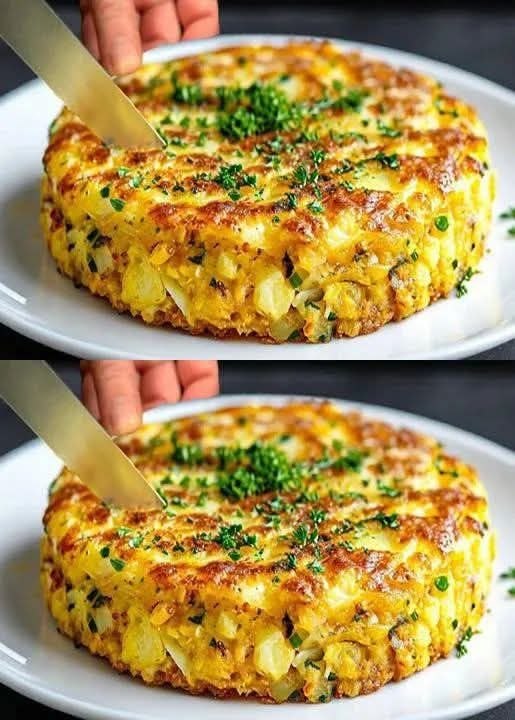
Instructions
- Preheat oven to 375°F (190°C). If your skillet is not oven-safe, have an oven-safe pie plate or baking dish ready.
- Heat 1 tablespoon olive oil in a 10-inch oven-safe, non-stick skillet over medium heat. Add the diced potatoes and cook, stirring occasionally, for 8-10 minutes, or until the potatoes start to soften and turn lightly golden.
- Add the chopped onion to the skillet with the potatoes. Cook for another 5-7 minutes, stirring occasionally, until the onion becomes translucent and fragrant.
- Stir in the diced zucchini, ½ teaspoon of salt, and ¼ teaspoon of black pepper. Continue to cook for 5-7 minutes, or until the zucchini is tender-crisp and has released some of its moisture. Remove the pan from the heat and set aside to cool slightly.
- While the vegetables cool, crack the 8 large eggs into a large mixing bowl. Add the milk, remaining ½ teaspoon of salt, remaining ¼ teaspoon of black pepper, chopped chives, chopped parsley, and optional red pepper flakes. Whisk vigorously until the eggs are well combined and slightly frothy.
- Add the cooled vegetable mixture from the skillet into the egg mixture. Stir gently to ensure the vegetables are evenly distributed throughout the eggs.
- Wipe out the skillet if necessary and lightly grease it with a tiny bit more olive oil or cooking spray. Pour the egg and vegetable mixture back into the skillet, spreading it evenly.
- Cook on the stovetop over medium-low heat for 8-10 minutes, without stirring, until the edges of the frittata begin to set and pull away from the sides of the pan, and the bottom is lightly golden. The center will still be liquid.
- Carefully transfer the skillet to the preheated oven. Bake for 15-20 minutes, or until the frittata is puffed, the center is set, and the top is golden brown. If you prefer a darker, crispier top, you can briefly place it under a broiler for 1-2 minutes, watching it very carefully to prevent burning.
- Once cooked, remove the skillet from the oven. Let the Golden Zucchini Egg rest in the pan for 5-10 minutes before slicing. This allows it to set further and makes for cleaner cuts.
- Garnish with extra fresh chives and parsley, if desired. Slice into wedges and serve warm.
Cooking Tips and Variations
For the crispiest potatoes and best flavor, ensure your skillet is hot enough when you add them. Don’t overcrowd the pan; if making a larger batch, cook potatoes in two batches. To prevent a watery frittata, you can lightly salt the diced zucchini and let it sit in a colander for 15-20 minutes, then pat it dry with paper towels before cooking. This draws out excess moisture. When whisking the eggs, make sure they are thoroughly combined; this contributes to a light and fluffy texture. Adding a splash of milk or cream helps create a custardy interior. For an extra boost of flavor, consider adding a pinch of garlic powder or a minced garlic clove to the vegetables during sautéing. Always use an oven-safe, non-stick pan for easy transition from stovetop to oven and hassle-free removal. If you don’t have an oven-safe skillet, you can transfer the partially set egg mixture to a greased pie plate or baking dish before baking.
Variations:
- Cheesy Delight: Stir in ½ cup of shredded cheddar, Gruyère, or Parmesan cheese into the egg mixture along with the vegetables for a richer flavor.
- Spicy Kick: Increase the red pepper flakes or add a finely minced jalapeño (seeds removed for less heat) with the vegetables.
- Mediterranean Twist: Add ¼ cup of crumbled feta cheese, a handful of chopped Kalamata olives, or a few sun-dried tomatoes (chopped) to the egg mixture.
- Protein Boost: Cooked and crumbled bacon, diced ham, or shredded chicken can be added to the vegetable mixture before combining with the eggs.
- Herb Garden: Experiment with other fresh herbs like thyme, oregano, or dill for different aromatic profiles.
- Seasonal Vegetables: Feel free to swap or add other quick-cooking vegetables. Bell peppers, spinach (wilt well and squeeze out excess water), mushrooms, or asparagus tips work wonderfully.
- Dairy-Free Option: Substitute plant-based milk (like unsweetened almond or soy milk) for regular milk.
Storage and Reheating
The Golden Zucchini Egg is fantastic for meal prepping and storing for later enjoyment. Once cooled completely, transfer any leftovers to an airtight container. It will keep well in the refrigerator for up to 3-4 days. To reheat, you can use several methods depending on your preference and time constraints. For best results and to maintain texture, reheat individual slices in a preheated oven or toaster oven at 300°F (150°C) for about 10-15 minutes, or until warmed through. This helps to keep the exterior slightly crisp and prevents the eggs from becoming rubbery. Alternatively, you can reheat slices in a microwave for 1-2 minutes on medium power, though this method may result in a softer texture. Avoid over-reheating, as this can dry out the eggs. This dish also tastes great served at room temperature, making it an excellent option for picnics or packed lunches.
Frequently Asked Questions
How do I prevent my frittata from sticking to the pan?
Using a good quality, oven-safe non-stick skillet is crucial. Ensure the pan is properly greased with olive oil or cooking spray before pouring in the egg mixture. You can also “season” a new non-stick pan by heating a little oil in it before its first use. If using cast iron, ensure it is well-seasoned. Allowing the frittata to set properly on the stovetop before transferring to the oven also helps create a non-stick layer on the bottom.
Can I make this dish ahead of time?
Absolutely! The Golden Zucchini Egg is an excellent make-ahead dish. You can prepare it entirely, allow it to cool, and then store it in the refrigerator. It reheats beautifully, as detailed in the “Storage and Reheating” section, and can also be enjoyed at room temperature. This makes it perfect for brunches, potlucks, or busy weekday breakfasts and lunches.
What’s the difference between a frittata and a Spanish tortilla?
While similar, there are key differences. A frittata is typically started on the stovetop and finished in the oven, often includes a wider variety of vegetables and sometimes cheese, and is usually served hot or at room temperature. A Spanish tortilla (tortilla Española) is traditionally cooked entirely on the stovetop, often flipped using a plate to cook both sides, and primarily features potatoes and onions. Our “Golden Zucchini Egg” takes inspiration from both, using the stovetop-to-oven method of a frittata but incorporating the potato element often found in a Spanish tortilla.
My frittata seems a bit watery. What did I do wrong?
A watery frittata is usually due to excess moisture from the vegetables, especially zucchini. Zucchini contains a lot of water, and if not cooked down sufficiently or treated, it can release this liquid into the eggs. To prevent this, ensure you cook the zucchini until it’s tender-crisp and has released some of its moisture. For an extra precaution, you can lightly salt the diced zucchini and let it sit in a colander for 15-20 minutes before cooking. This draws out a significant amount of water; just remember to pat it dry thoroughly with paper towels before adding it to the skillet.