Instructions
- Heat the olive oil in a large pot or Dutch oven over medium heat. Add the chopped onion and sauté for 5-7 minutes, or until softened and translucent. Add the minced garlic and cook for another minute until fragrant, being careful not to burn it.
- Pour in the chicken broth. Add the whole chicken breasts, dried oregano, a pinch of salt, and a few grinds of black pepper to the pot. Bring the broth to a gentle simmer.
- Reduce the heat to low, cover the pot, and let it simmer for 15-20 minutes, or until the chicken breasts are cooked through and tender.
- Carefully remove the cooked chicken breasts from the pot and set them aside on a cutting board to cool slightly.
- Increase the heat to medium-high and bring the broth back to a gentle boil. Add the rice or orzo to the simmering broth. Cook according to package directions, usually 10-15 minutes for rice or 8-10 minutes for orzo, until tender.
- While the rice or orzo is cooking, shred the cooled chicken breasts using two forks or your fingers. Set the shredded chicken aside.
- Once the rice or orzo is cooked, reduce the heat under the soup to its lowest setting. The soup should be barely simmering, not boiling.
- In a medium bowl, whisk the three eggs vigorously until they are pale yellow and frothy, about 2-3 minutes.
- Gradually add the fresh lemon juice to the whisked eggs, continuing to whisk constantly.
- Now comes the crucial tempering step: Ladle about 1 cup of the hot chicken broth from the soup into the egg-lemon mixture, whisking continuously and slowly. This gradually raises the temperature of the eggs, preventing them from scrambling. Continue adding another 1-2 ladles of hot broth, whisking constantly, until the egg mixture is warm to the touch.
- Slowly pour the tempered egg-lemon mixture back into the large pot of soup, whisking the soup constantly as you pour. This ensures the egg mixture fully incorporates and thickens the soup without curdling.
- Immediately add the shredded chicken back into the pot. Stir gently to combine.
- Remove the soup from the heat. Do NOT allow the soup to boil after adding the egg mixture, as this will cause the eggs to curdle.
- Taste the soup and adjust seasoning with additional salt and pepper if needed.
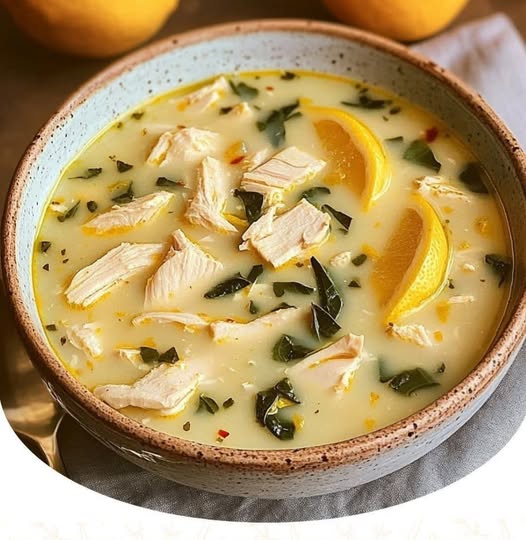
- Ladle the Greek Lemon Chicken Soup into bowls. Garnish each serving with a sprinkle of fresh parsley, a lemon wedge, and optional red pepper flakes. Serve immediately.
Cooking Tips and Variations
Achieving the perfect Avgolemono requires a bit of care, especially with the tempering process. Always ensure your eggs are at room temperature before whisking; this helps them emulsify better and reduces the risk of curdling. When tempering, the key is patience and constant whisking. Slowly introduce the hot broth to the egg mixture, one ladle at a time, to gradually bring up its temperature. Once the egg mixture is warm, pour it back into the pot slowly while continuously stirring the soup. Never let the soup boil after the egg mixture has been added, as this is the primary cause of curdling. If you find your soup is a little too thin, you can gently heat it over very low heat for a few more minutes, stirring constantly, but avoid anything more than a gentle simmer.
For the best flavor, always use fresh lemon juice. The bottled stuff simply doesn’t compare to the bright, zesty notes of freshly squeezed lemons. Adjust the amount of lemon juice to your personal preference; some like it tangier, others milder. A high-quality chicken broth is also paramount. If you have homemade chicken broth, this is the perfect opportunity to use it. Store-bought low-sodium options are a good alternative if homemade isn’t available, allowing you to control the salt content.
While often made with rice or orzo, you can experiment with other small pasta shapes like stelline or even vermicelli broken into small pieces. For a low-carb variation, you might omit the rice/pasta altogether or add some finely diced zucchini or cauliflower florets. To add more vegetables, consider sautéing finely diced carrots and celery along with the onion at the beginning of the recipe. A handful of fresh spinach, stirred in at the very end with the chicken, will wilt beautifully and add extra nutrients and color, as seen in the image analysis. For a different herb profile, a touch of fresh dill can be a wonderful addition, complementing the lemon and chicken flavors beautifully. Serve this soup with warm, crusty bread to soak up every last drop of the delicious broth.
Storage and Reheating
Greek Lemon Chicken Soup is best enjoyed fresh, but leftovers can be stored in an airtight container in the refrigerator for up to 3 days. It’s important to note that the texture of Avgolemono can change slightly upon refrigeration and reheating due to the egg content. The soup may thicken considerably, and the egg may separate slightly if reheated too quickly or at too high a temperature.
When reheating, do so gently over low heat on the stovetop. Stir frequently to prevent the bottom from sticking and to help re-emulsify the soup. If the soup has become too thick, you can whisk in a splash of additional chicken broth or water until it reaches your desired consistency. Avoid boiling the soup during reheating. Do not microwave the soup on high heat, as this can cause the egg to curdle rapidly; if using a microwave, reheat in short bursts at a lower power setting, stirring between each burst. Freezing Avgolemono is generally not recommended, as the egg-lemon mixture’s texture does not hold up well to freezing and thawing, often resulting in a grainy or separated consistency.
Frequently Asked Questions
What is Avgolemono?
Avgolemono is a classic Greek sauce and soup base made from eggs, lemon juice, and hot broth. In its soup form, as Greek Lemon Chicken Soup, it’s a comforting and savory dish typically featuring chicken, rice or small pasta, and the signature creamy, tangy broth created by tempering the egg and lemon mixture into the soup.
How do I prevent the eggs from curdling in Avgolemono?
The key to preventing curdling is the tempering process. Ensure your eggs are at room temperature. Whisk them thoroughly with the lemon juice. Then, slowly drizzle small amounts (a ladle at a time) of hot soup broth into the egg mixture while continuously whisking, gradually raising the egg’s temperature. Once the egg mixture is warm, slowly pour it back into the main pot of soup while constantly stirring the soup. Crucially, never let the soup boil after the egg mixture has been added.
Can I make Avgolemono vegetarian?
Yes, you can easily make a vegetarian version of Avgolemono. Simply substitute the chicken broth with a good quality vegetable broth and omit the chicken. You can add extra vegetables like carrots, celery, or zucchini, or even some chickpeas, to make it more substantial. The egg-lemon base remains the same, providing that signature creamy texture.
What can I do if my Avgolemono is too thick or too thin?
If your Avgolemono is too thick, you can thin it out by gently stirring in a bit more warm chicken broth or water until it reaches your desired consistency. If it’s too thin, you can try to simmer it gently over very low heat for a few more minutes, stirring constantly, to encourage further thickening, but be very careful not to boil it once the eggs are added. Alternatively, some recipes include a small amount of cornstarch or flour mixed with cold water to create a slurry that can be stirred in for thickening, but this is less traditional and can alter the characteristic texture.