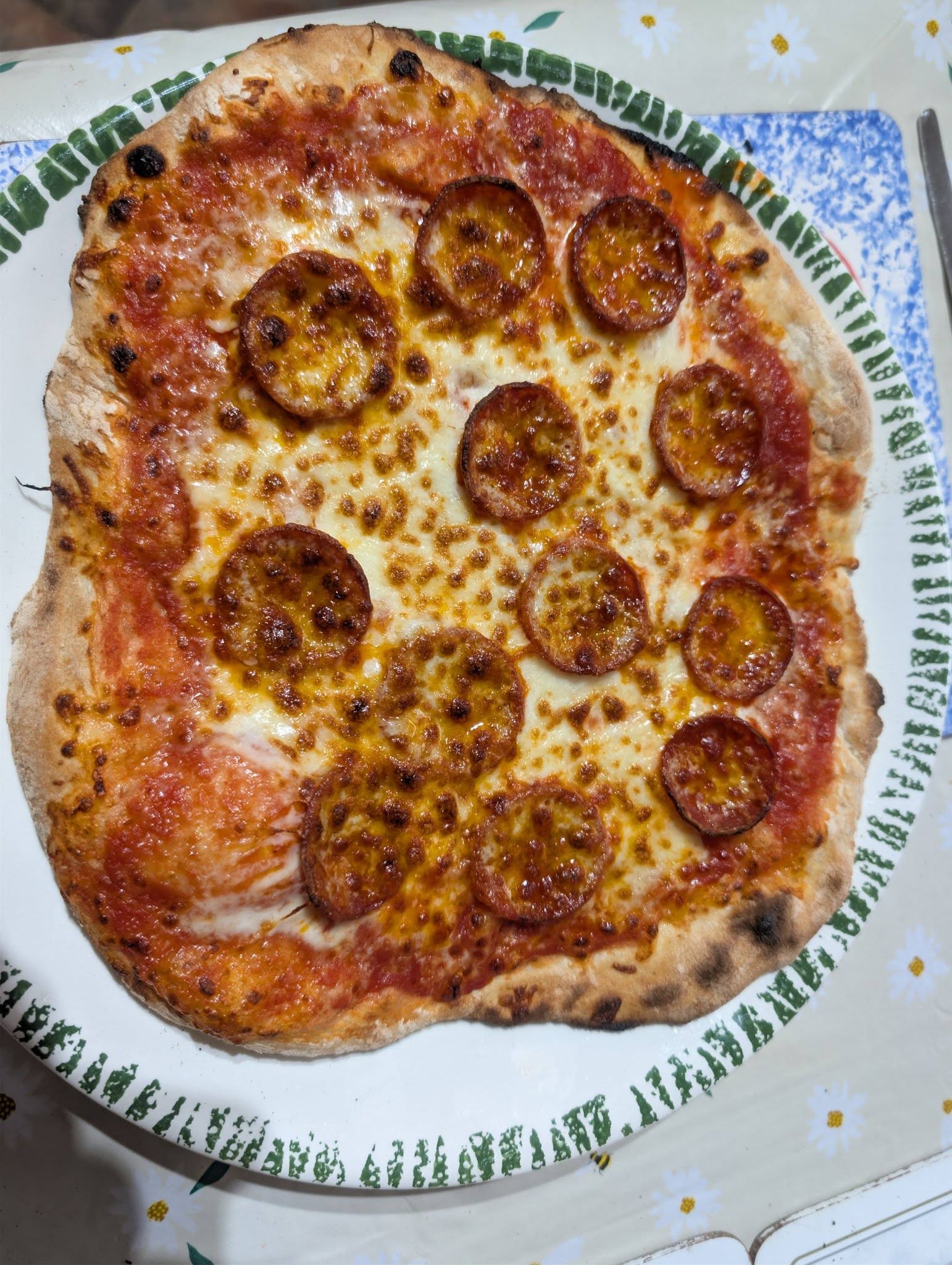
Instructions
- Prepare the Pizza Dough: In a large bowl or stand mixer, combine the warm water, sugar, and yeast. Let sit for 5-10 minutes until foamy.
- Add 3 cups of flour, 2 tablespoons of olive oil, and salt to the yeast mixture. Mix with a spoon or dough hook until a shaggy dough forms.
- Gradually add the remaining flour, ¼ cup at a time, until the dough comes together and is no longer sticky.
- Knead the dough on a lightly floured surface or with the dough hook for 5-7 minutes until smooth and elastic.
- Lightly grease a clean bowl with olive oil. Place the dough in the bowl, turning to coat. Cover tightly with plastic wrap or a damp kitchen towel.
- Let the dough rise in a warm place for 1-1.5 hours, or until doubled in size.
- Make the Pizza Sauce: While the dough is rising, heat 1 tablespoon of olive oil in a medium saucepan over medium heat. Add minced garlic and cook for 1 minute until fragrant, being careful not to burn it.
- Stir in the crushed tomatoes, oregano, basil, red pepper flakes (if using), salt, and black pepper. Bring to a simmer, then reduce heat to low and cook for 15-20 minutes, stirring occasionally, to allow flavors to meld. Remove from heat and set aside.
- Prepare the Meatballs: In a medium bowl, combine the ground beef/Italian sausage, breadcrumbs, grated Parmesan, egg, Italian seasoning, garlic powder, salt, and pepper. Mix until just combined, being careful not to overmix.
- Form the mixture into small, ½-inch meatballs. You should get about 20-24 meatballs.
- Cook the Toppings: Heat 1 tablespoon of olive oil in a large skillet over medium-high heat. Add the meatballs and cook, turning occasionally, until browned on all sides and cooked through. Remove from the skillet and set aside.
- In the same skillet, add the sliced smoked sausage and cook until lightly browned and slightly crispy. Remove and set aside.
- Add the sliced mushrooms to the skillet (add a touch more oil if needed) and cook until softened and lightly browned, about 5-7 minutes. Remove and set aside.
- Preheat Oven and Pizza Stone/Steel: If using a pizza stone or steel, place it in the oven and preheat the oven to 500°F (260°C) for at least 30-45 minutes. If not using a stone, preheat a baking sheet at the same temperature.
- Assemble the Pizzas: Once the dough has risen, gently punch it down and divide it into two equal portions.
- On a lightly floured surface, gently stretch or roll one portion of dough into a 12-inch circle. If the dough springs back, let it rest for 5-10 minutes before continuing.
- Carefully transfer the dough to a piece of parchment paper or a pizza peel dusted with cornmeal or semolina (if using a stone/steel).
- Spread about ½ cup of pizza sauce evenly over the dough, leaving a ½-inch border for the crust.
- Sprinkle half of the shredded mozzarella over the sauce.
- Arrange half of the cooked meatballs, pepperoni, smoked sausage, and mushrooms evenly over the cheese.
- Bake the Pizzas: Carefully transfer the pizza (with parchment paper, or slide from the peel) onto the preheated pizza stone/steel or baking sheet.
- Bake for 10-15 minutes, or until the crust is golden brown and the cheese is bubbly and lightly browned.
- Repeat with the second pizza.
- Finish and Serve: Once baked, carefully remove the pizza from the oven. Sprinkle with freshly grated Parmesan cheese and fresh basil leaves (if using).
- Let the pizza cool for a few minutes before slicing and serving.
Cooking Tips and Variations
For an extra crispy crust, ensure your oven is as hot as it can get, ideally 500°F (260°C), and allow ample time for your pizza stone or baking steel to preheat. A preheated surface delivers that immediate burst of heat to the dough, creating a perfectly crisp bottom. If you don’t have a pizza stone or steel, preheating an inverted baking sheet works wonders. For an even richer flavor, brush the crust with a little olive oil before baking.
The beauty of this “Meat Feast” pizza is its versatility. Feel free to swap out the ground beef for Italian sausage in your meatballs for an added layer of spice. You can also experiment with different types of smoked sausage, such as chorizo for a spicier kick, or even thinly sliced ham or bacon for additional smoky notes. If you’re a fan of even more meat, consider adding some crumbled cooked bacon or prosciutto. To add more vegetables, thinly sliced bell peppers, red onions, or even a handful of spinach would be delicious additions. Just be sure to pre-cook any high-moisture vegetables to avoid a soggy pizza.
Making pizza in a cast iron skillet is a fantastic way to achieve a deep-dish style pizza with an incredibly crispy crust. To do this, preheat your cast iron skillet in the oven while it’s heating up. Carefully remove the hot skillet, brush with olive oil, then press your dough into the hot skillet, pushing it up the sides. Add your sauce and toppings, then bake as directed. The preheated skillet will give you an amazing crunchy bottom crust. Remember not to overload your pizza with too many toppings, as this can lead to a dense, undercooked, or soggy crust. Less is often more when it comes to allowing all the flavors to shine and ensuring even cooking.
Proper dough proofing is crucial for a light and airy crust. Ensure your water is warm enough to activate the yeast but not too hot to kill it (around 105-115°F is ideal). If your kitchen is cool, consider placing the dough in a slightly warm, turned-off oven to help it rise. Once the dough has rested after kneading and stretching, it becomes much easier to handle. Don’t rush this resting period, as it allows the gluten to relax, preventing the dough from shrinking back when you try to shape it. For the best melt and flavor, opt for a good quality, low-moisture, whole-milk mozzarella. Fresh mozzarella can be used but tends to release more water, so consider patting it dry before adding to the pizza.
Pre-cooking your meatballs, sausage, and mushrooms is a vital step. Not only does it ensure they are fully cooked through, but it also removes excess moisture that could otherwise make your pizza soggy. Browning the meats also adds a depth of flavor that baking alone cannot achieve. For a true pizzeria experience, consider using a high-quality San Marzano tomato for your sauce; their natural sweetness and low acidity are unparalleled. Finally, don’t be afraid to experiment with herbs and spices in your sauce – a pinch of fennel seed or a bay leaf can elevate the flavor profile significantly.
Storage and Reheating
To store any leftover “Meat Feast” pizza, allow it to cool completely to room temperature. Once cooled, individual slices can be wrapped tightly in aluminum foil or plastic wrap, or placed in an airtight container. Properly stored, the pizza will last in the refrigerator for up to 3-4 days. For longer storage, you can freeze individual slices. Wrap each slice tightly in plastic wrap, then an additional layer of aluminum foil, and place them in a freezer-safe bag or container. Frozen pizza can be kept for up to 1-2 months, though for best quality, aim to consume it within a month.
Reheating pizza properly is key to maintaining its delicious texture. The microwave is convenient but often results in a soggy crust. For the best results, use an oven or a skillet. To reheat in the oven, preheat your oven to 350°F (175°C). Place the leftover slices directly on the oven rack or on a baking sheet. Bake for 8-12 minutes, or until the cheese is melted and bubbly and the crust is crispy again. If reheating from frozen, it may take 15-20 minutes or longer.
Alternatively, for an incredibly crispy crust, reheat pizza on the stovetop. Place a non-stick skillet over medium heat (no oil needed for already cooked pizza). Add the pizza slices to the dry skillet and cook for 2-4 minutes, until the bottom is crispy. Then, add a few drops of water to the pan (away from the pizza) and immediately cover the skillet with a lid. This will create steam that melts the cheese and warms the toppings without making the crust soggy. Cook for another 1-2 minutes until the cheese is perfectly melted. This method is excellent for achieving that fresh-from-the-oven texture.
Frequently Asked Questions
What kind of mozzarella cheese is best for pizza?
For the best results on a homemade pizza like this, low-moisture, whole-milk mozzarella cheese is ideal. It melts beautifully, creates that classic cheesy pull, and doesn’t release too much water, which can make your crust soggy. Pre-shredded varieties are convenient, but shredding a block of mozzarella yourself often yields a better melt and flavor.
Can I prepare the pizza dough in advance?
Absolutely! You can prepare the pizza dough up to 2-3 days in advance. After the first rise, gently punch down the dough, lightly coat it with olive oil, and place it in an airtight container or a bowl covered tightly with plastic wrap. Store it in the refrigerator. When you’re ready to make pizza, remove the dough from the fridge about 30-60 minutes before shaping to allow it to come to room temperature, which makes it easier to work with.
How do I prevent my pizza from getting a soggy bottom?
There are several key steps to prevent a soggy pizza bottom. First, ensure your oven is preheated to a very high temperature (500°F/260°C) and that your pizza stone or baking sheet has had ample time to get hot. This high heat provides an immediate blast to the dough, crisping it up. Second, pre-cook any high-moisture toppings like mushrooms or sausage to remove excess water before they go on the pizza. Third, don’t overload the pizza with too many toppings or too much sauce; a thin, even layer is best. Finally, transfer the pizza quickly to the hot surface to minimize heat loss.
Can I use store-bought pizza dough or sauce?
Yes, you can definitely use store-bought pizza dough or sauce to save time. If using store-bought dough, follow the package instructions for preparation and baking. For sauce, choose a good quality marinara or pizza sauce. While homemade dough and sauce offer superior flavor and texture, using store-bought options is a great shortcut that still allows you to enjoy a delicious homemade “Meat Feast” pizza.