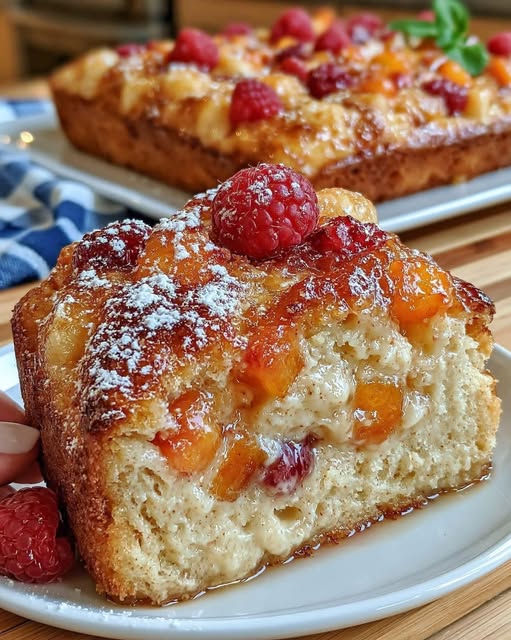
Instructions
- Preheat your oven to 350°F (175°C). Grease and flour a 9×5-inch loaf pan, or line it with parchment paper, leaving an overhang on the long sides for easy removal.
- In a medium bowl, whisk together the flour, baking powder, and salt. Set aside.
- In a large bowl, using an electric mixer, cream together the softened butter and granulated sugar until light and fluffy, about 2-3 minutes.
- Add the eggs one at a time, beating well after each addition until fully incorporated. Scrape down the sides of the bowl as needed.
- Stir in the vanilla extract.
- With the mixer on low speed, gradually add half of the dry ingredients to the wet ingredients, mixing until just combined.
- Pour in the heavy cream and mix until just incorporated.
- Add the remaining dry ingredients, mixing only until no streaks of flour remain. Be careful not to overmix, as this can lead to a tough cake.
- Gently fold in the diced peaches and fresh raspberries. Be delicate to avoid crushing the raspberries too much.
- Pour the batter into the prepared loaf pan and spread evenly.
- Bake for 50-60 minutes, or until a wooden skewer or toothpick inserted into the center of the cake comes out clean or with a few moist crumbs attached.
- Remove the cake from the oven and let it cool in the pan on a wire rack for 10-15 minutes.
- Carefully lift the cake out of the pan using the parchment paper overhang and transfer it to the wire rack to cool completely.
- While the cake cools, prepare the glaze (if using). In a small bowl, whisk together the powdered sugar, milk or heavy cream, and vanilla extract until smooth and pourable. Add more milk/cream a teaspoon at a time if it’s too thick, or more powdered sugar if it’s too thin.
- Once the cake is completely cool, drizzle the glaze over the top. Let the glaze set for a few minutes before slicing and serving.
Cooking Tips and Variations
To achieve the best texture and flavor for your Peach Melba Cream Breakfast Cake, start with ripe but firm peaches. If they’re too soft, they’ll become mushy in the cake. If using fresh raspberries, avoid washing them until just before use to prevent them from getting waterlogged. For a truly tender cake, be very careful not to overmix the batter once the flour is added; mixing too much develops the gluten, leading to a tougher texture. A good rule of thumb is to stop mixing as soon as no dry streaks of flour are visible. Letting the cake cool completely before slicing is crucial, especially if you’re adding a glaze, as it allows the cake to set properly and prevents it from crumbling. For easy release and cleanup, lining your loaf pan with parchment paper is a game-changer – simply leave an overhang on the longer sides to create “handles” for lifting the cake out.
If peaches aren’t in season, you can absolutely use canned or frozen peaches. For canned peaches, make sure they are well-drained and patted dry to avoid adding excess moisture to the batter. If using frozen peaches, thaw them first and drain any excess liquid. Frozen raspberries can also be used; toss them with a tablespoon of flour before folding them into the batter to prevent them from sinking to the bottom of the cake and to absorb some of their moisture.
For variations, consider swapping out the peaches for other stone fruits like nectarines or plums, which would offer a similar juicy texture. Blueberries or mixed berries can also create a delicious alternative. To add a delightful crunch and nutty flavor, fold in ½ cup of chopped almonds or pecans with the fruit. Spices like a pinch of cinnamon, nutmeg, or even a touch of cardamom can enhance the warmth and complexity of the cake’s flavor profile. If you prefer individual portions or a quicker bake time, this recipe can easily be adapted into muffins. Simply divide the batter among a 12-cup muffin tin (lined with paper liners) and bake for 20-25 minutes, or until a toothpick comes out clean. For an extra touch of richness, brush the warm, just-baked cake with a couple of tablespoons of melted unsalted butter before applying the glaze; this creates a beautiful sheen and adds depth of flavor.
Storage and Reheating
To store your Peach Melba Cream Breakfast Cake, ensure it has cooled completely. If it has a glaze, allow the glaze to fully set. Wrap the cake tightly in plastic wrap or aluminum foil, or store it in an airtight container at room temperature for up to 2-3 days. If your kitchen is particularly warm, or if you want to extend its freshness, you can store it in the refrigerator for up to 5 days. For refrigerated cake, it’s best to bring it back to room temperature before serving for the best texture and flavor.
For reheating, if you prefer a warm slice, you can gently heat individual servings in the microwave for 15-30 seconds, or until just warmed through. Alternatively, you can place slices on a baking sheet and warm them in a preheated oven at 300°F (150°C) for about 5-10 minutes, or until heated to your liking. Be careful not to overheat, as this can dry out the cake.
This cake also freezes beautifully. Once completely cooled, wrap the entire cake or individual slices tightly in plastic wrap, then an additional layer of aluminum foil. Place in a freezer-safe bag or container and freeze for up to 3 months. To thaw, simply transfer the frozen cake to the refrigerator overnight, or leave it on the countertop at room temperature for a few hours. Once thawed, you can warm it gently as described above, or enjoy it at room temperature. Freezing is a great way to enjoy this delightful breakfast cake long after peach and raspberry season has passed!
Frequently Asked Questions
Can I use frozen peaches and raspberries instead of fresh?
Yes, you absolutely can! If using frozen peaches, thaw them first and drain any excess liquid to prevent adding too much moisture to your batter. For frozen raspberries, you can add them directly to the batter, but tossing them with a tablespoon of flour beforehand can help prevent them from sinking to the bottom and absorb some of their released moisture.
What kind of cream should I use in the recipe?
The recipe calls for heavy cream, which provides richness and moisture to the cake. Make sure it’s at room temperature for better incorporation into the batter. While sour cream or plain Greek yogurt could potentially work as a substitute for some of the liquid, they would alter the flavor and texture slightly, making the cake a bit tangier and denser. For the best result matching the recipe, stick with heavy cream.
How can I tell if my cake is fully baked?
The best way to check for doneness is to insert a wooden skewer or toothpick into the center of the cake. If it comes out clean or with a few moist crumbs attached, your cake is ready. If it comes out with wet batter, continue baking for another 5-10 minutes and check again. The top should also be golden brown and the edges should start pulling away slightly from the sides of the pan.