Instructions
- Prepare the Vegetables: Heat 1 tablespoon of olive oil in a large skillet or griddle over medium-high heat. Add the thinly sliced onions, green bell pepper, red bell pepper, and mushrooms. Sauté, stirring occasionally, until the vegetables are tender and slightly caramelized, about 8-10 minutes. Remove the cooked vegetables from the skillet and set aside in a bowl.
- Prepare the Rolls: While the vegetables are cooking, prepare the hoagie rolls. Slice them horizontally, almost all the way through, leaving one side intact. Lightly butter the inside of the rolls or brush with a little olive oil. You can toast them lightly in a separate pan, under the broiler, or directly on the griddle for 1-2 minutes until golden brown and slightly crispy. Set aside.
- Cook the Steak: Increase the heat in the same skillet to high. Add the remaining 1 tablespoon of olive oil. Once the oil is shimmering, add the thinly sliced steak in a single layer. Do not overcrowd the pan; cook in batches if necessary. Season the steak with garlic powder, salt, and black pepper. Cook for 1-2 minutes per side, stirring and chopping the steak with a spatula as it cooks, until it’s no longer pink and is nicely browned.
- Combine and Melt Cheese: Once the steak is cooked, return the sautéed vegetables to the skillet with the steak. Mix everything together well. Divide the steak and vegetable mixture into four equal portions directly on the griddle. Place 2-3 slices of provolone cheese over each portion of the mixture.
- Melt the Cheese: To achieve that perfect melt, you can do one of two things:
- Option A (Skillet/Griddle Method): Place a lid over the skillet or griddle for 1-2 minutes, allowing the steam to trap and melt the cheese.
- Option B (Broiler Method): If your skillet is oven-safe, you can carefully transfer it to a preheated broiler for 30-60 seconds, watching closely, until the cheese is bubbly and melted.
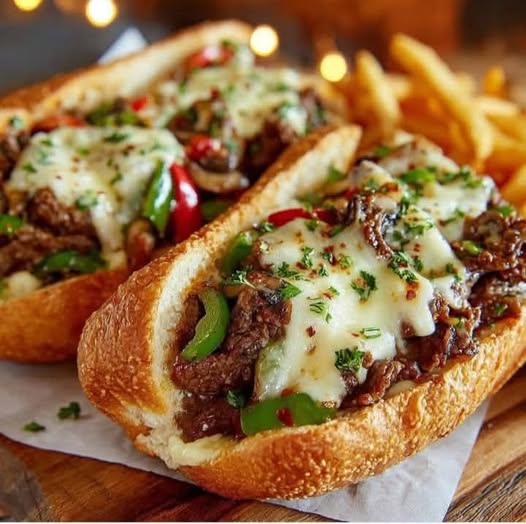
- Assemble the Cheesesteaks: Once the cheese is gloriously melted and gooey, carefully slide a prepared hoagie roll over each portion of the cheesy steak and vegetable mixture. Use a spatula to scoop the entire mixture into the roll, ensuring all the delicious fillings are tucked inside.
- Serve Immediately: Garnish with fresh chopped parsley, if desired. Serve your homemade Philly Cheesesteaks piping hot, perhaps with a side of crispy fries, just like they do in the City of Brotherly Love!
Cooking Tips and Variations
Achieving the perfect Philly Cheesesteak is an art, but with these tips and variations, you’ll be a master in no time. The key to tender steak is proper slicing. Freezing your ribeye for about 20-30 minutes before slicing makes it much firmer and easier to get those paper-thin strips. Always slice against the grain to ensure maximum tenderness; this breaks up the muscle fibers and prevents a chewy sandwich. For the cheese, while provolone is classic and offers a beautiful melt and mild flavor, don’t shy away from American cheese for a creamier, milder profile, or even the iconic Cheez Whiz for that authentic, unapologetically gooey experience. Each cheese offers a distinct, delicious take on the classic.
The roll is just as crucial as the filling. A true Philly Cheesesteak demands a specific type of roll: a long, crusty hoagie roll that is soft on the inside but sturdy enough to hold all the juicy fillings without falling apart. Avoid overly soft or dense breads. Some people prefer to lightly toast the inside of the roll with butter or olive oil for added texture and flavor, creating a slight barrier that prevents the roll from getting too soggy. This also adds a delightful crunch to every bite. When cooking the steak, a very hot pan is essential to get a good sear quickly, locking in the juices. Don’t overcrowd the pan; cook in batches if necessary to maintain high heat and ensure the steak browns rather than steams. Use a metal spatula to chop and mix the steak as it cooks, creating those desirable smaller pieces that distribute evenly throughout the sandwich.
For variations, the world is your oyster. While our recipe includes onions, green and red bell peppers, and mushrooms, you can customize your “wit” (with onions) or “wit-out” (without onions) preference. Some purists insist on only onions, while others love the added sweetness and crunch of peppers. Feel free to experiment with other vegetables like jalapeños for a spicy kick, or even a touch of Worcestershire sauce in with the steak for an extra layer of umami. For those who prefer a different protein, thinly sliced chicken breast can be used to create a “Philly Chicken Cheesesteak,” a delicious alternative that’s equally satisfying. You can also add a hint of spice with a dash of red pepper flakes to the vegetables while they sauté. Remember, the best cheesesteak is the one you enjoy the most, so don’t hesitate to make it your own!
Storage and Reheating
While a Philly Cheesesteak is undoubtedly best enjoyed fresh off the griddle, sometimes you might have leftovers, or you might want to prepare components ahead of time. Storing and reheating it properly will help maintain its deliciousness, though the texture of the roll might not be as perfect as when it was first made.
To store leftover cheesesteak filling, allow the mixture of steak, vegetables, and melted cheese to cool completely. Transfer it to an airtight container and store it in the refrigerator for up to 3-4 days. It’s generally best to store the filling and the rolls separately if possible, as the rolls can become soggy if stored with the moist filling. If you have any unused rolls, keep them in their original packaging or a bread bag at room temperature.
When it comes to reheating, avoid the microwave if you want to preserve any semblance of texture, especially for the steak and roll. The microwave tends to make the steak rubbery and the roll soggy. The best method for reheating the filling is on the stovetop. Heat a skillet over medium heat with a tiny bit of oil or butter. Add the cold cheesesteak filling and break it up with a spatula. Cook, stirring occasionally, until the mixture is heated through and sizzling, about 5-7 minutes. Once hot, you can add a fresh slice or two of cheese on top and cover the skillet for a minute to melt it. For the roll, you can lightly toast a fresh one, or if using a leftover roll, warm it briefly in a dry skillet, toaster oven, or conventional oven until it’s slightly crisp. Then, assemble your reheated filling into the warmed roll and enjoy. This method will give you the closest experience to a freshly made cheesesteak.
Frequently Asked Questions
What kind of steak is best for a Philly Cheesesteak?
The best steak for an authentic Philly Cheesesteak is thinly sliced ribeye. Ribeye is known for its marbling, which contributes to its rich flavor and tenderness when cooked quickly. If ribeye is unavailable, thinly sliced sirloin or even top round can be used as alternatives, though they may be slightly less tender. The key is to slice the steak as thin as possible, often achieved by freezing it partially before slicing.
What are the traditional cheese options for a Philly Cheesesteak?
The three most traditional cheese options for a Philly Cheesesteak are Provolone, American cheese, and Cheez Whiz. Provolone offers a mild, slightly sharp flavor and excellent melting qualities, creating a classic stringy texture. American cheese provides a very creamy, mild, and gooey melt. Cheez Whiz, while perhaps surprising to some, is a very popular and traditional choice in Philadelphia for its intensely smooth and tangy cheese sauce that coats every piece of meat and vegetable.
What’s the difference between a “wit” and a “wit-out” cheesesteak?
In Philadelphia, when ordering a cheesesteak, you’ll often be asked if you want it “wit” or “wit-out.” This refers to whether you want onions on your cheesesteak. “Wit” means your cheesesteak will come with fried onions, while “wit-out” means it will be served without them. This simple question highlights the importance of onions as a traditional and beloved component of the sandwich.
Can I make a Philly Cheesesteak ahead of time?
While a Philly Cheesesteak is best enjoyed immediately after preparation for optimal texture and freshness, you can prepare some components ahead of time. The vegetables (onions, peppers, mushrooms) can be sautéed and stored in an airtight container in the refrigerator for up to 3 days. The steak can be thinly sliced and kept raw in the refrigerator for up to 24 hours. However, it’s not recommended to fully assemble the cheesesteak far in advance, as the roll can become soggy and the steak might lose its ideal texture. It’s best to cook the steak, melt the cheese, and assemble the sandwich just before serving.