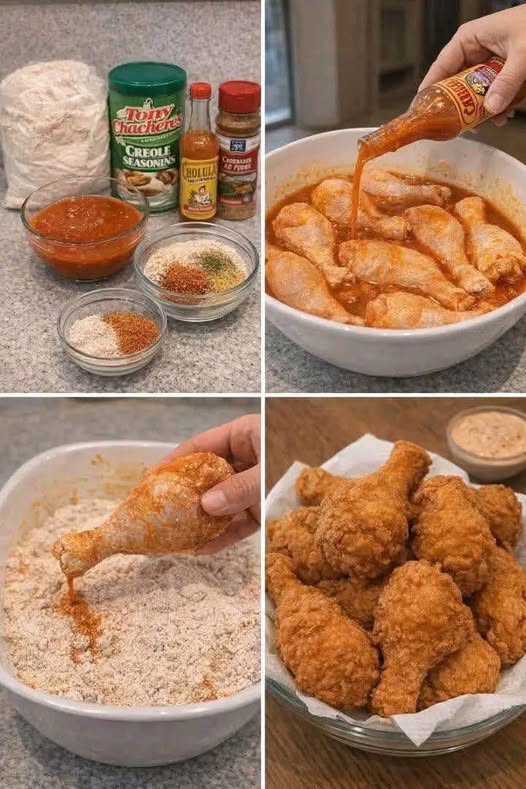
Instructions
- Prepare the Chicken: Begin by thoroughly patting the chicken drumsticks dry with paper towels. Trim off any excess skin or fat. Place the chicken in a large, non-reactive bowl or a resealable plastic bag.
- Make the Marinade: In a separate bowl, whisk together the buttermilk, Cholula Hot Sauce, 1 tablespoon of Tony Chachere’s Creole Seasoning, garlic powder, onion powder, smoked paprika, cayenne pepper, and black pepper. Pour this marinade over the chicken, ensuring all pieces are fully submerged. If using a bag, squeeze out as much air as possible.
- Marinate the Chicken: Cover the bowl or seal the bag and refrigerate for at least 4 hours, or preferably overnight (up to 24 hours) for maximum flavor and tenderness. The longer the better!
- Prepare the Breading Mixture: In a large, shallow dish or a sturdy resealable plastic bag, combine the all-purpose flour, cornstarch, baking powder, the remaining 1 tablespoon of Tony Chachere’s Creole Seasoning, chili powder, dried oregano, dried thyme, dried parsley flakes, salt, and white pepper. Whisk or shake well to ensure all ingredients are evenly distributed. This is your dry dredging mix.
- Set Up for Dredging: Remove the chicken from the marinade, allowing any excess to drip off slightly, but do not pat dry. You want some of the marinade to cling for a craggy crust. Have your dry breading mixture ready.
- Bread the Chicken: Working with one piece of chicken at a time, place it into the dry breading mixture. Press the flour mixture firmly onto the chicken, ensuring it’s completely coated. Really get in there and press the breading on – this helps create that signature craggy texture. Shake off any excess flour. Place the breaded chicken on a wire rack set over a baking sheet. Repeat with all remaining chicken pieces. Let the breaded chicken rest at room temperature for about 15-20 minutes. This allows the breading to adhere better and prevents it from falling off during frying.
- Prepare for Frying: Pour the frying oil into a large, heavy-bottomed pot or Dutch oven (at least 5-6 inches deep) until it reaches about 3-4 inches. Attach a deep-fry thermometer to the side of the pot, ensuring it doesn’t touch the bottom. Heat the oil over medium-high heat until it reaches a consistent temperature of 325-350°F (160-175°C).
- Fry the Chicken: Carefully lower 2-3 pieces of breaded chicken into the hot oil, being careful not to overcrowd the pot. Overcrowding will lower the oil temperature too quickly and result in greasy, unevenly cooked chicken.
- Cook to Golden Perfection: Fry the chicken for approximately 6-8 minutes per side, or until it’s a deep golden brown and the internal temperature reaches 165°F (74°C) when checked with a meat thermometer inserted into the thickest part of the drumstick without touching the bone.
- Drain and Rest: Once cooked, carefully remove the chicken from the oil using tongs and transfer it to a clean wire rack set over a baking sheet lined with paper towels to drain any excess oil. This also allows the crust to stay crispy. Let the chicken rest for a few minutes before serving.
- Repeat: Continue frying the remaining chicken in batches, ensuring the oil temperature returns to 325-350°F (160-175°C) between batches. Adjust the heat as needed.
- Serve: Serve your homemade Popeye’s-style fried chicken hot with your favorite sides!
Cooking Tips and Variations
Achieving that perfect Popeye’s crunch and flavor requires attention to detail. Firstly, temperature control is the golden rule of deep-frying. Invest in a reliable deep-fry thermometer and maintain the oil temperature between 325-350°F (160-175°C). Too low, and your chicken will be greasy; too high, and the outside will burn before the inside is cooked. Secondly, don’t overcrowd the pot. Frying in small batches is crucial. Each piece needs space to cook evenly and allow the oil to maintain its temperature. Overcrowding drops the oil temperature, leading to soggy, undercooked chicken.
Seasoning layers are what truly build the depth of flavor in this recipe. From the initial brine (a quick salt-water soak for an hour before marinating can further tenderize and season) to the buttermilk marinade and finally the heavily spiced breading, each step adds another dimension. Don’t skimp on the spices in the flour mixture – that’s where much of the signature Popeye’s kick comes from. For an even crispier, thicker crust, consider a double dredging technique: after the initial breading, dip the chicken back into any remaining marinade (or a simple egg wash) and then dredge it in the flour mixture a second time. This creates an extra-craggy texture.
The oil type matters. Use a high smoke point oil like peanut, vegetable, or canola oil for deep-frying. These oils can withstand the high temperatures needed without breaking down or imparting off-flavors. Finally, resting time is just as important for fried chicken as it is for a steak. Letting the chicken rest on a wire rack after frying allows the juices to redistribute throughout the meat, ensuring every bite is succulent and tender, while also allowing the crust to maintain its crispness. For variations, you can easily adjust the spice level by increasing or decreasing the cayenne pepper and hot sauce to your preference. For a truly authentic Popeye’s experience, serve your fried chicken with classic sides like fluffy biscuits, creamy coleslaw, mashed potatoes with gravy, or spicy mac & cheese. A dab of spicy mayo or a remoulade also makes for an excellent dipping sauce!
Storage and Reheating
To store any leftover Popeye’s copycat fried chicken, allow it to cool completely to room temperature. Once cooled, place the chicken in an airtight container or wrap individual pieces tightly in aluminum foil. Refrigerate within two hours of cooking. Properly stored, fried chicken will last for 3-4 days in the refrigerator. For longer storage, you can freeze the chicken for up to 2-3 months. To freeze, wrap individual pieces tightly in plastic wrap, then place them in a freezer-safe bag or container.
Reheating fried chicken correctly is key to maintaining its crispy texture. Avoid the microwave, as it tends to make the crust soggy. The best method for reheating is in the oven or an air fryer. If using an oven, preheat it to 375°F (190°C). Place the chicken on a wire rack set over a baking sheet. Reheat for 15-20 minutes for refrigerated chicken, or 25-30 minutes for frozen chicken (thaw in the fridge overnight first for best results), until heated through and crispy. For an air fryer, preheat to 350°F (175°C) and cook for 8-12 minutes, flipping halfway, until hot and crispy. The goal is to heat it thoroughly while restoring that delightful crunch.
Frequently Asked Questions
Can I use boneless chicken for this recipe?
While drumsticks are recommended for their juiciness and authentic feel, you can absolutely use boneless, skinless chicken thighs or breasts. Adjust frying times accordingly; boneless pieces will cook much faster, typically 5-7 minutes depending on thickness. Be sure to check the internal temperature to ensure they reach 165°F (74°C).
What if I don’t have buttermilk?
No problem! You can easily make a buttermilk substitute at home. For every 1 cup of milk (dairy or non-dairy), add 1 tablespoon of white vinegar or lemon juice. Let it sit for 5-10 minutes until it slightly curdles. This acidified milk works wonderfully in the marinade, helping tenderize the chicken and allowing the breading to adhere.
Can I make this recipe gluten-free?
Yes, you can! Substitute the all-purpose flour with a good quality gluten-free all-purpose flour blend (one that contains xanthan gum works best for structure). Ensure all your seasonings and hot sauces are also certified gluten-free. The cornstarch is naturally gluten-free and will still contribute to crispiness.
Why is my fried chicken sometimes soggy when I make it at home?
Several factors can lead to soggy fried chicken. The most common reasons are: the oil temperature being too low (which causes the chicken to absorb too much oil), overcrowding the pot (which lowers oil temperature), not allowing the breaded chicken to rest before frying (which helps the breading adhere), or placing the cooked chicken directly onto a flat surface instead of a wire rack (which traps steam and makes the crust soggy). Ensure you follow the oil temperature guidelines and use a wire rack for draining.