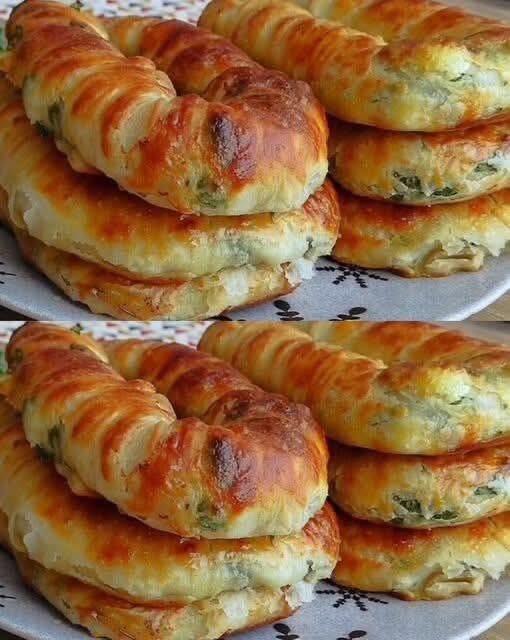
Instructions
- Preheat your oven to 375°F (190°C). Lightly grease a large baking sheet or line it with parchment paper.
- Prepare the filling: In a large bowl, combine the crumbled feta cheese, cottage cheese, 3 of the large eggs, yogurt, chopped spinach (if using), and chopped parsley (if using). Mix well until all ingredients are evenly distributed. Season with a pinch of black pepper. Taste and add salt if necessary, keeping in mind that feta is already quite salty.
- Prepare the butter and oil mixture: In a small bowl, melt the butter and combine it with the olive oil. This mixture will be used to brush the phyllo layers.
- Set up your workstation: Carefully unroll the thawed phyllo dough. Keep the phyllo sheets covered with a slightly damp kitchen towel to prevent them from drying out while you work.
- Assemble the Banycski: Take one sheet of phyllo dough and lay it flat on your clean work surface. Lightly brush the entire surface with the butter-oil mixture.
- Place a second sheet of phyllo dough directly on top of the first, aligning the edges. Lightly brush this second sheet with the butter-oil mixture as well.
- Spoon about 2-3 tablespoons of the cheese and spinach filling in a line along one of the longer edges of the double-layered phyllo sheet, leaving a small border at the ends. The amount of filling will depend on the size of your phyllo sheets and how many individual pastries you want to make.
- Carefully roll up the phyllo sheets tightly from the long edge, creating a cylinder or log shape.
- Once rolled, gently coil the cylinder into a spiral or “snail” shape. Alternatively, you can keep it as a straight log. If making a spiral, place it on the prepared baking sheet. If making straight logs, you can arrange them side-by-side on the baking sheet.
- Repeat steps 5-9 with the remaining phyllo sheets and filling. If making individual spirals, arrange them slightly apart on the baking sheet to allow for even baking. If making straight logs, you may need to slice them into smaller portions before serving.
- In a small bowl, whisk the remaining 1 large egg with 1 tablespoon of water or milk to create an egg wash.
- Brush the tops of all the assembled Banycski pastries generously with the egg wash. This will give them a beautiful golden-brown color and a slightly glossy finish.
- Bake for 25-35 minutes, or until the Banycski are golden brown and puffed up. The exact baking time may vary depending on your oven and the thickness of your pastries.
- Once baked, remove the Banycski from the oven. Let them cool for a few minutes on the baking sheet before transferring them to a wire rack. Serve warm or at room temperature.
Cooking Tips and Variations
Working with phyllo dough can seem daunting at first, but with a few simple tricks, you’ll be a pro in no time. Always remember to keep your phyllo dough covered with a slightly damp kitchen towel while you’re not actively working with it. This prevents it from drying out and becoming brittle, which can lead to tearing. If a sheet does tear, don’t panic! Simply patch it up with another piece and continue brushing with the butter-oil mixture; the layers will hide any imperfections. For an extra flaky result, ensure you’re generous with the butter-oil mixture between each layer. This fat creates steam during baking, separating the layers and giving Banycski its signature crisp texture.
To achieve that perfect golden-brown crust, don’t skimp on the egg wash. A good, even coating will ensure a beautiful color and a slight sheen. You can also sprinkle a few sesame seeds or nigella seeds over the top before baking for added flavor and visual appeal. When it comes to the filling, adjust the salt content carefully. Feta cheese is naturally salty, so taste your mixture before adding extra salt. If your filling seems too wet, you can drain the cottage cheese briefly or add a tablespoon of breadcrumbs to absorb some moisture, preventing a soggy pastry bottom.
The beauty of Banycski lies in its adaptability. While our recipe features a classic cheese and spinach filling, feel free to experiment! For a meatier version, sauté finely ground beef or lamb with onions and spices, then mix it with a little egg and herbs. Vegetable lovers can try a leek and potato filling, or even a mushroom and onion mix. Sweet variations also exist, often using pumpkin or apple, though they typically omit the feta. For a different shape, instead of coiling into a spiral, you can layer several sheets of phyllo in a baking pan, spreading half the filling, then more phyllo, and the rest of the filling, baking it as a large rectangular pie. This is often referred to as Banitsa na tava (tray banitsa). You can also cut the rolled logs into individual portions before baking for easier serving.
Storage and Reheating
Banycski is best enjoyed fresh from the oven when the phyllo is at its crispiest, but leftovers are still incredibly delicious and can be stored and reheated effectively. To store, allow the Banycski to cool completely to room temperature. Once cooled, place the pastries in an airtight container. They can be stored in the refrigerator for up to 3-4 days. For longer storage, Banycski freezes remarkably well. Wrap individual pieces tightly in plastic wrap, then place them in a freezer-safe bag or container. Frozen Banycski can be kept for up to 2-3 months.
When it comes to reheating, there are a few options to bring back that delightful texture. If reheating from the refrigerator, the best method is to use an oven or a toaster oven. Preheat your oven to 300-325°F (150-160°C). Place the Banycski directly on a baking sheet and heat for 10-15 minutes, or until warmed through and the phyllo has crisped up again. Avoid using a microwave for reheating if possible, as it tends to make the phyllo soggy, losing its flaky texture. However, if time is of the essence, a quick 30-60 second zap can warm it up, though the texture won’t be as good.
To reheat from frozen, you can do so directly from the freezer. Place the frozen Banycski on a baking sheet and bake in a preheated oven at 350°F (175°C) for about 20-30 minutes, or until thoroughly heated and golden brown. If you thawed the Banycski first, follow the instructions for reheating from the refrigerator. Always ensure the internal temperature reaches a safe level before serving, and check that the pastries are fully heated through.
Frequently Asked Questions
What kind of phyllo dough should I use?
You should use standard frozen phyllo dough, typically found in the freezer aisle of most grocery stores. Make sure to thaw it properly according to the package instructions, usually overnight in the refrigerator or for a few hours at room temperature, before you plan to use it. Thawing it slowly helps prevent the delicate sheets from sticking together or tearing.
Can I make Banycski ahead of time?
Yes, you can prepare Banycski ahead of time. You can assemble the pastries and then refrigerate them, unbaked, for up to 24 hours. Cover them tightly with plastic wrap to prevent the phyllo from drying out. When you’re ready to bake, remove them from the fridge about 30 minutes before baking to allow them to come closer to room temperature, then proceed with the egg wash and baking instructions. You can also freeze assembled, unbaked Banycski for longer storage, then bake directly from frozen, adding extra baking time.
What can I serve with Banycski?
Banycski is incredibly versatile and pairs well with many things. It’s traditionally enjoyed for breakfast or as a snack with a cup of plain yogurt or ayran (a savory yogurt drink). It also makes a wonderful accompaniment to a fresh green salad, especially one dressed with a light vinaigrette, for a more substantial meal. Some people enjoy it with a side of pickled vegetables or a strong cup of coffee or tea. Its savory nature means it can complement both light and hearty dishes.
My phyllo dough is tearing, what am I doing wrong?
Tearing phyllo is a common issue, especially if it’s your first time working with it. The most frequent cause is the dough drying out. Always keep the unused phyllo sheets covered with a slightly damp kitchen towel while you are working. Also, handle the sheets very gently. If a sheet does tear, don’t worry! You can simply overlap another piece of phyllo over the tear and continue brushing with the butter-oil mixture; the layers will meld together during baking, and the tear will be unnoticeable in the final product. Ensure your melted butter and oil mixture is not too hot, as excessive heat can also make the phyllo brittle.