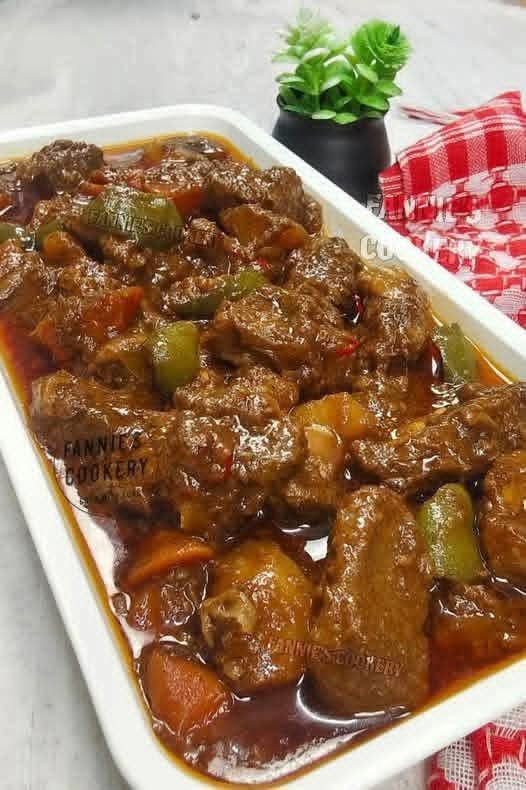
Instructions
- Pat the beef cubes dry with paper towels. Season generously with salt and black pepper. This step helps to create a good sear and enhance the flavor of the beef.
- Heat the vegetable oil in a large heavy-bottomed pot or Dutch oven over medium-high heat. Once the oil is shimmering, add the beef cubes in a single layer, working in batches if necessary to avoid overcrowding the pot. Do not stir immediately.
- Sear the beef for 3-4 minutes on each side, until deeply browned. Browning the beef creates a rich flavor foundation for the stew. Remove the seared beef from the pot and set aside.
- Reduce the heat to medium. Add the chopped onion to the pot and sauté for 3-5 minutes, or until softened and translucent. Scrape up any browned bits from the bottom of the pot as you stir, as these bits are full of flavor.
- Add the minced garlic to the pot and cook for another minute until fragrant, being careful not to burn it.
- Return the seared beef to the pot. Pour in the tomato sauce, soy sauce, white vinegar, and water (or beef broth). Add the bay leaves and crushed black peppercorns.
- Bring the mixture to a gentle boil, then reduce the heat to low, cover the pot, and simmer for 1.5 to 2 hours, or until the beef is fork-tender. Stir occasionally to prevent sticking and ensure even cooking. The longer you simmer, the more tender and flavorful the beef will become.
- After the beef is tender, add the cubed potatoes and carrot rounds to the pot. Stir gently to submerge them in the sauce. Continue to simmer, covered, for another 15-20 minutes, or until the potatoes and carrots are tender but not mushy.
- Add the green bell pepper and green peas (if using) to the pot. Cook for an additional 5-7 minutes, uncovered, until the bell peppers are slightly softened but still retain some crispness and the peas are cooked through. You want the bell peppers to be vibrant and not overcooked.
- Taste the Mechado and adjust seasoning with additional salt and pepper if needed. If the sauce is too thick, you can add a little more water or beef broth. If it’s too thin, you can simmer it uncovered for a few more minutes to reduce, or thicken with a cornstarch slurry (1 tablespoon cornstarch mixed with 2 tablespoons cold water, stirred into the stew).
- Remove the bay leaves before serving. Serve the Simple Beef Mechado hot, ideally over freshly steamed white rice, allowing the rice to soak up all the delicious, savory sauce.
Cooking Tips and Variations
Achieving perfectly tender beef is key to an outstanding Mechado. To ensure your beef chuck is melt-in-your-mouth soft, consider marinating it for at least 30 minutes, or even overnight, in a portion of the soy sauce and vinegar. This not only tenderizes the meat but also infuses it with flavor from the get-go. Searing the beef vigorously before braising is another non-negotiable step; it locks in juices and develops a rich, complex flavor profile through the Maillard reaction. If you have a slow cooker, you can transfer the seared beef and sauce ingredients after step 6 and cook on low for 6-8 hours or on high for 3-4 hours, adding vegetables during the last hour. For a quicker result, a pressure cooker can reduce the braising time to about 30-45 minutes after reaching pressure. Always ensure the beef is sufficiently tender before adding the vegetables, as vegetables cook much faster.
The beauty of Mechado lies in its adaptability. For a richer, deeper flavor, you can add 1/4 cup of liver spread along with the tomato sauce; this is a traditional addition in some Mechado recipes and adds an incredible umami depth. If you prefer a touch of sweetness, a tablespoon of brown sugar can be added along with the tomato sauce, balancing the tartness of the vinegar and tomato. For those who enjoy a bit of heat, a pinch of chili flakes or a small chopped bird’s eye chili can be added during the sautéing of the garlic and onions. Don’t be afraid to experiment with other vegetables; green beans, red bell peppers, or even chickpeas can be wonderful additions. Some variations include adding hotdogs, sliced into rounds, during the last 10 minutes of cooking for a playful twist, especially popular with children. You can also swap out beef chuck for other cuts like brisket or short ribs, though cooking times may vary. Always taste and adjust the seasoning throughout the cooking process; a little more soy sauce for saltiness, vinegar for tang, or a pinch of sugar can perfectly balance the flavors to your preference.
When serving, while white rice is the traditional accompaniment, don’t limit yourself. Mechado can be equally delightful with mashed potatoes, crusty bread to sop up the sauce, or even pasta. For a complete meal, consider serving it alongside a simple green salad to cut through the richness. The flavors of Mechado tend to deepen and meld even further overnight, making it an excellent make-ahead dish for meal prepping or entertaining. Garnish with fresh chopped parsley or cilantro just before serving for a burst of color and freshness.
Storage and Reheating
Proper storage is key to enjoying your Simple Beef Mechado for days to come. Once the stew has cooled down to room temperature (this should take no more than 2 hours to prevent bacterial growth), transfer it to an airtight container. It can be stored in the refrigerator for up to 3-4 days. For longer storage, Mechado freezes exceptionally well. Divide the stew into freezer-safe containers or heavy-duty freezer bags, ensuring there’s about an inch of headspace if using containers to allow for expansion. It can be stored in the freezer for up to 2-3 months. Thaw frozen Mechado overnight in the refrigerator before reheating.
To reheat, the best method depends on the quantity. For individual portions, the microwave is convenient. Place the Mechado in a microwave-safe bowl, cover loosely, and heat on high for 2-3 minutes, stirring halfway through, until heated through. For larger quantities, transfer the Mechado to a pot or Dutch oven and reheat over medium-low heat on the stovetop. Stir occasionally to prevent sticking and ensure even heating. If the sauce has thickened too much during storage, you can add a splash of water or beef broth to reach your desired consistency. Bring it to a gentle simmer and cook until heated through, typically 10-15 minutes. Always ensure the stew is piping hot (reaching an internal temperature of 165°F or 74°C) before serving to ensure food safety.
Frequently Asked Questions
What kind of beef is best for Mechado?
For Mechado, beef chuck is highly recommended because it’s a tougher cut with a good amount of connective tissue and fat, which breaks down during the long braising process to become incredibly tender and flavorful. Other good options include beef brisket or boneless short ribs, which also benefit from slow cooking.
Can I make Mechado in a slow cooker?
Absolutely! Mechado is an excellent slow cooker recipe. After searing the beef and sautéing the aromatics on the stovetop (steps 1-6), transfer everything to your slow cooker. Cook on low for 6-8 hours or on high for 3-4 hours, or until the beef is fork-tender. Add the potatoes and carrots during the last hour of cooking, and the bell peppers and peas during the last 30 minutes, to ensure they don’t turn mushy.
How can I thicken the Mechado sauce if it’s too thin?
If your Mechado sauce is too thin, there are a couple of ways to thicken it. The simplest is to remove the lid during the last 15-20 minutes of simmering and allow the sauce to reduce naturally. Alternatively, you can create a cornstarch slurry: mix 1 tablespoon of cornstarch with 2 tablespoons of cold water until smooth, then slowly stir this mixture into the simmering stew. Cook for another 2-3 minutes, stirring constantly, until the sauce thickens to your desired consistency.
Is Mechado spicy?
Traditionally, Mechado is not a spicy dish. Its flavor profile is savory, tangy, and slightly sweet from the tomato base, soy sauce, and vinegar. However, you can easily add a kick to your Mechado by incorporating chili flakes, a small chopped bird’s eye chili, or a touch of your favorite hot sauce during the cooking process to suit your preference for spice.